

Cell Biology
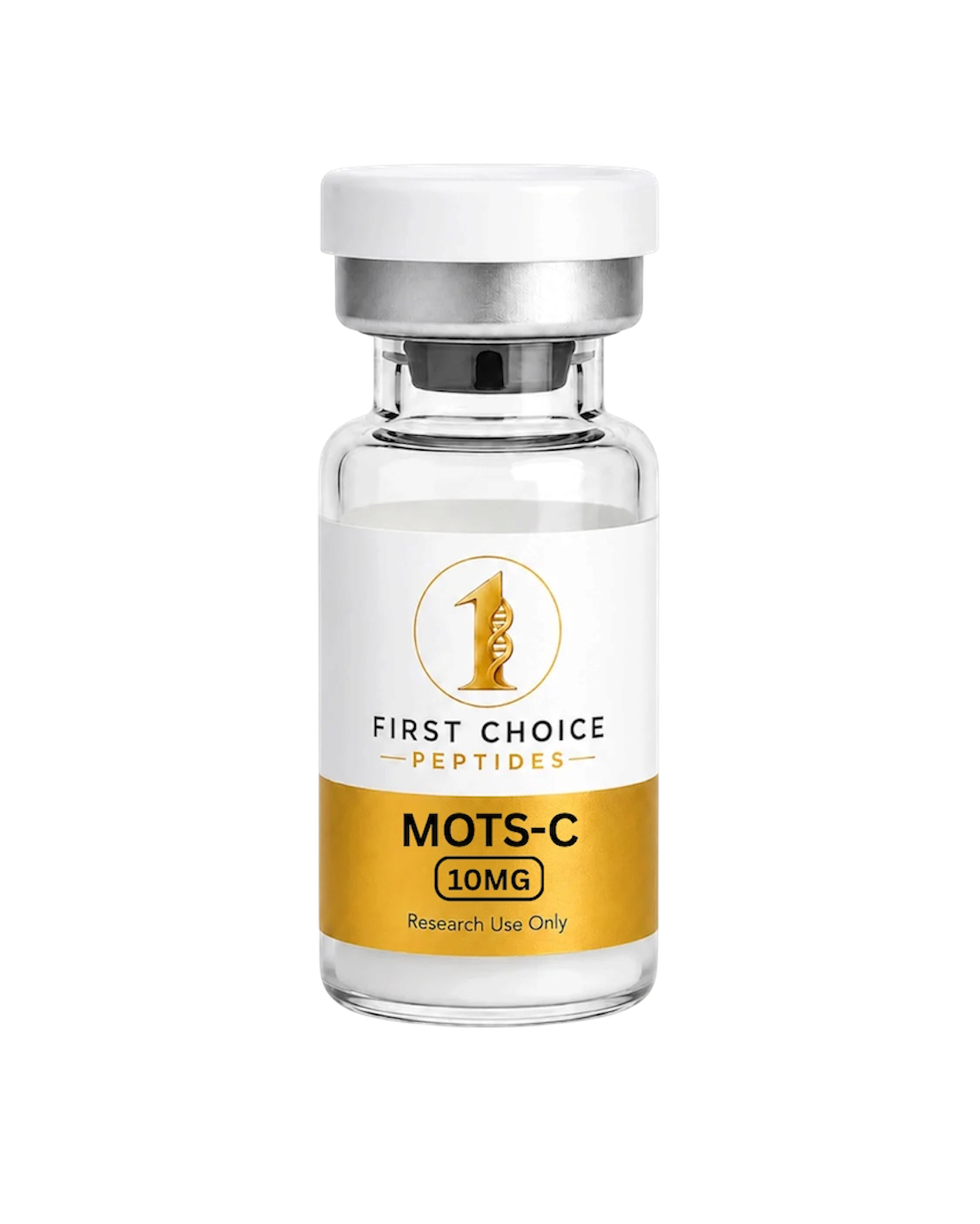
MOTS-C
Mitochondrial-derived peptide for cellular bioenergetics research
MOTS-c is a 16-amino-acid mitochondrial-derived peptide studied in cellular signaling, mitochondrial communication, and metabolic-stress models. Offered strictly for laboratory research use only. Not for human or veterinary use.
Frequently researched together
Other laboratory research compounds available in our catalog.




Compound information
Technical specifications
What is MOTS-C?
MOTS-c is a synthetic 16-residue peptide whose sequence corresponds to a mitochondrial-derived peptide, an open reading frame encoded within the mitochondrial genome rather than in nuclear DNA. It belongs to a small family of short sequences read from mitochondrial DNA and studied in mitochondrial biology, cellular bioenergetics and metabolic research. The catalogue files it under cell biology, records no synonyms, and lists 10 mg and 40 mg vials of lyophilized powder.
In single-letter notation the sequence is written MRWQEMGYIFYPRKLR: two methionines, three basic residues towards the C terminus, and an aromatic set of one tryptophan and two tyrosines that makes ultraviolet absorbance at 280 nm a practical concentration check. It is catalogued under CAS 1627580-64-6 with the molecular formula C101H152N28O22S2 and a molecular weight of 2174.60 g/mol, and the two sulfur atoms in that formula match the two methionine residues in the sequence.
Lyophilized material is held at -20 C protected from light, and reconstituted solution at 2 to 8 C for short-term laboratory use, with repeated freeze-thaw cycling avoided and methionine oxidation worth guarding against. Purity and identity are verified by third-party HPLC and mass spectrometry, with a certificate of analysis per lot. This material is supplied strictly for laboratory research and is not for human or veterinary use.
- CAS number
- 1627580-64-6
- Molecular formula
- C101H152N28O22S2
- Molecular weight
- 2174.60 g/mol
Stability information
Recommended handling and storage conditions for retaining compound identity and integrity in the laboratory.
Store lyophilized at −20°C, protected from light. Reconstitute and refrigerate (2–8°C) for short-term research use.
Regulatory information
Development origin and regulatory status, compiled for reference.
Research compound · Not FDA-approved
Frequently asked
Questions about MOTS-C
What purity is MOTS-C supplied at, and is a Certificate of Analysis available?
Yes. Each lot of MOTS-C is tested by a third-party laboratory using HPLC for purity, and the certificate of analysis for the current lot is linked on this page and in the certificate library.
How is the identity of MOTS-C verified?
Identity is confirmed by mass spectrometry against the expected molecular weight of 2174.60 g/mol, alongside HPLC retention behaviour. Both results are recorded on the lot certificate.
How should MOTS-C be stored on receipt?
Lyophilized material is stored at -20 C protected from light. Once reconstituted it is kept at 2 to 8 C for short-term laboratory use, and repeated freeze-thaw cycles are avoided.
Where is MOTS-C shipped from?
Orders ship from the United States in discreet, tracked packaging. Shipping is available to US addresses only.
Is MOTS-C supplied for research use only?
Yes. MOTS-C is sold strictly as a laboratory research material. It is not for human or veterinary use, not for diagnostic procedures, and has not been evaluated by the U.S. Food and Drug Administration. See the research use disclaimer for the full terms.
Answers describe how this material is tested, stored and shipped. They are not guidance on any use, and this compound is not for human or veterinary use.
Sources & references
Published literature in which this compound has been the subject of laboratory or preclinical study. Listed for bibliographic reference only.
Research and educational purposes only. These references are provided for bibliographic context. They are not evidence of safety or efficacy, and nothing here is medical advice or a claim about any use in humans or animals.
Frontiers in endocrinology
MOTS-c: A promising mitochondrial-derived peptide for therapeutic exploitation
BioEssays : news and reviews in molecular, cellular and developmental biology
MOTS-c: A Mitochondrial-Encoded Regulator of the Nucleus
Frontiers in physiology
Role of MOTS-c in the regulation of bone metabolism
Diabetes & metabolism journal
Mitochondrial-Encoded Peptide MOTS-c, Diabetes, and Aging-Related Diseases
Free radical biology & medicine
MOTS-c: A novel mitochondrial-derived peptide regulating muscle and fat metabolism
Journal of translational medicine
Mitochondria-derived peptide MOTS-c: effects and mechanisms related to stress, metabolism and aging