

Neurobiology
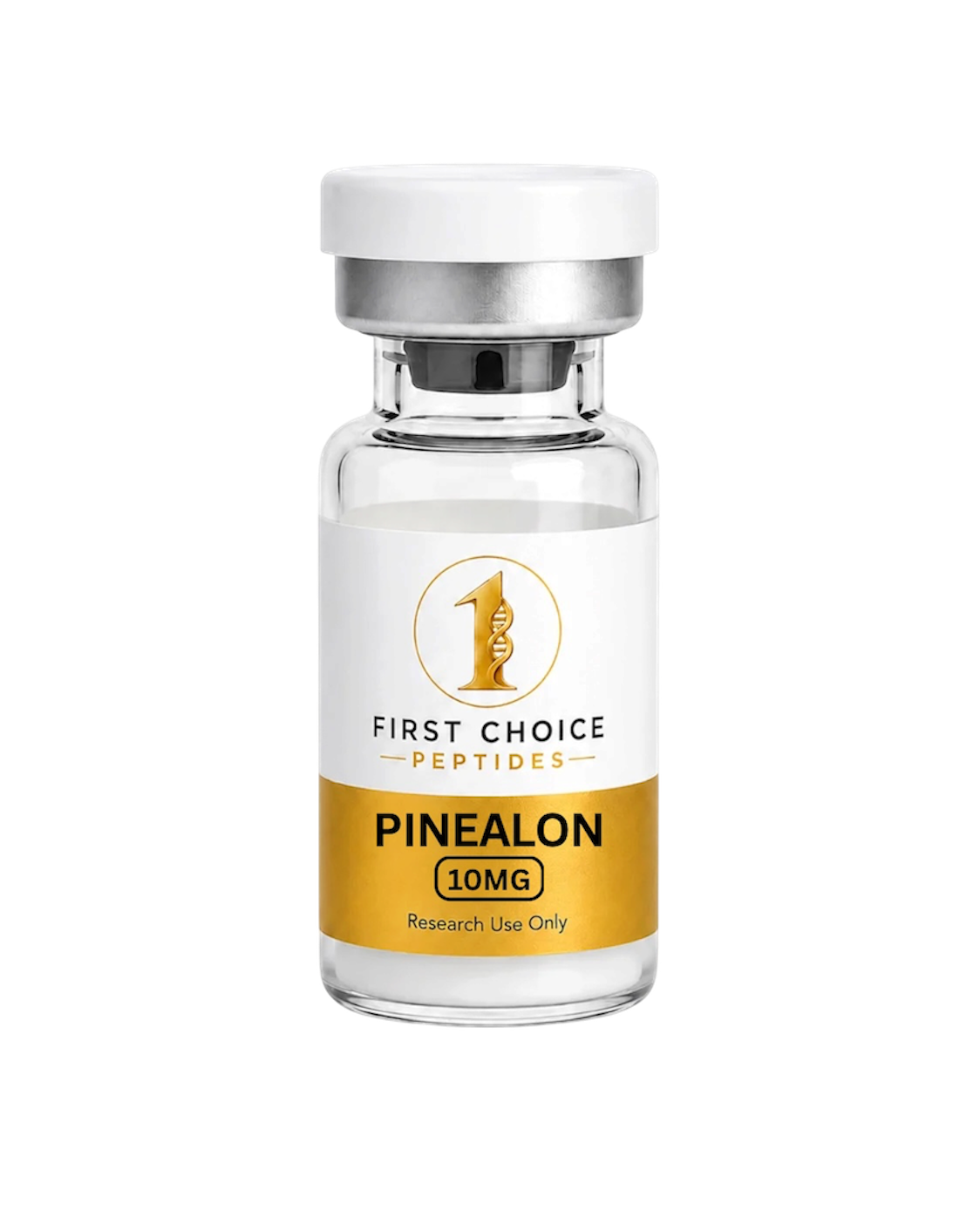
Pinealon
Tripeptide Research Material for Neuronal & Gene Expression Studies
Pinealon is a synthetic tripeptide composed of L-glutamic acid, L-aspartic acid, and L-arginine (Glu-Asp-Arg), commonly referred to in research literature as the EDR peptide. Pinealon has been investigated in experimental neuronal and cellular models examining gene-expression regulation, protein synthesis, oxidative-stress response, neuronal signaling, and cellular survival mechanisms. Research involving neuronal cultures has also examined the EDR peptide in relation to dendritic-spine maintenance and apoptosis-associated processes. Additional preclinical studies have examined Pinealon in models involving neuronal resistance to oxidative stress and cognitive-function-related endpoints. These findings remain experimental and should not be interpreted as establishing safety or efficacy for human use. For laboratory research use only. Not for human or veterinary use. Not for consumption, administration, diagnostic use, or therapeutic use.
Frequently researched together
Other laboratory research compounds available in our catalog.

Compound information
Technical specifications
What is Pinealon?
Pinealon is a synthetic 3-residue peptide whose sequence corresponds to the tripeptide L-glutamic acid, L-aspartic acid and L-arginine, written Glu-Asp-Arg. In the single-letter amino-acid code that reads as EDR, which is why the research literature commonly calls it the EDR peptide. The catalogue lists it in the neurobiology section and records no other catalogue synonyms.
The compound belongs to the group of short synthetic peptides described as peptide bioregulators, a class defined in the Russian-language gerontology literature. Peptides in that group are typically two to four residues long and are prepared by ordinary chemical synthesis rather than isolated from tissue. The sequence is linear, with a free N-terminal amine and a free C-terminal carboxyl and no recorded modification. Two acidic side chains and one basic side chain give the molecule a net charge across most of the ordinary buffer range.
The catalogue entry records no numerical identifiers: a CAS registry number, a molecular formula and a molecular weight are each not catalogued here, so none is stated. The material is supplied lyophilized in a 20 mg vial. Purity and identity are established by third-party HPLC and mass spectrometry, with a certificate of analysis for each lot. Pinealon is supplied strictly for laboratory research and is not for human or veterinary use, nor for consumption, administration, diagnostic use or therapeutic use.
Stability information
Recommended handling and storage conditions for retaining compound identity and integrity in the laboratory.
Store lyophilized at −20°C, protected from light. Reconstitute and refrigerate (2–8°C) for short-term research use.
Regulatory information
Development origin and regulatory status, compiled for reference.
Research compound · Not FDA-approved
Frequently asked
Questions about Pinealon
What purity is Pinealon supplied at, and is a Certificate of Analysis available?
Yes. Each lot of Pinealon is tested by a third-party laboratory using HPLC for purity, and the certificate of analysis for the current lot is linked on this page and in the certificate library.
How is the identity of Pinealon verified?
Identity is confirmed by mass spectrometry against the expected molecular weight, alongside HPLC retention behaviour. Both results are recorded on the lot certificate.
How should Pinealon be stored on receipt?
Lyophilized material is stored at -20 C protected from light. Once reconstituted it is kept at 2 to 8 C for short-term laboratory use, and repeated freeze-thaw cycles are avoided.
Where is Pinealon shipped from?
Orders ship from the United States in discreet, tracked packaging. Shipping is available to US addresses only.
Is Pinealon supplied for research use only?
Yes. Pinealon is sold strictly as a laboratory research material. It is not for human or veterinary use, not for diagnostic procedures, and has not been evaluated by the U.S. Food and Drug Administration. See the research use disclaimer for the full terms.
Answers describe how this material is tested, stored and shipped. They are not guidance on any use, and this compound is not for human or veterinary use.
Sources & references
Published literature in which this compound has been the subject of laboratory or preclinical study. Listed for bibliographic reference only.
Research and educational purposes only. These references are provided for bibliographic context. They are not evidence of safety or efficacy, and nothing here is medical advice or a claim about any use in humans or animals.
Advances in gerontology = Uspekhi gerontologii
[Investigation of antihypoxic properties of short peptides]
Rejuvenation research
Pinealon increases cell viability by suppression of free radical levels and activating proliferative processes
International journal of clinical and experimental medicine
Pinealon protects the rat offspring from prenatal hyperhomocysteinemia
Advances in gerontology = Uspekhi gerontologii
[Pinealon and Cortexin influence on behavior and neurochemical processes in 18-month aged rats within hypoxia and hypothermia]