

Cell Biology
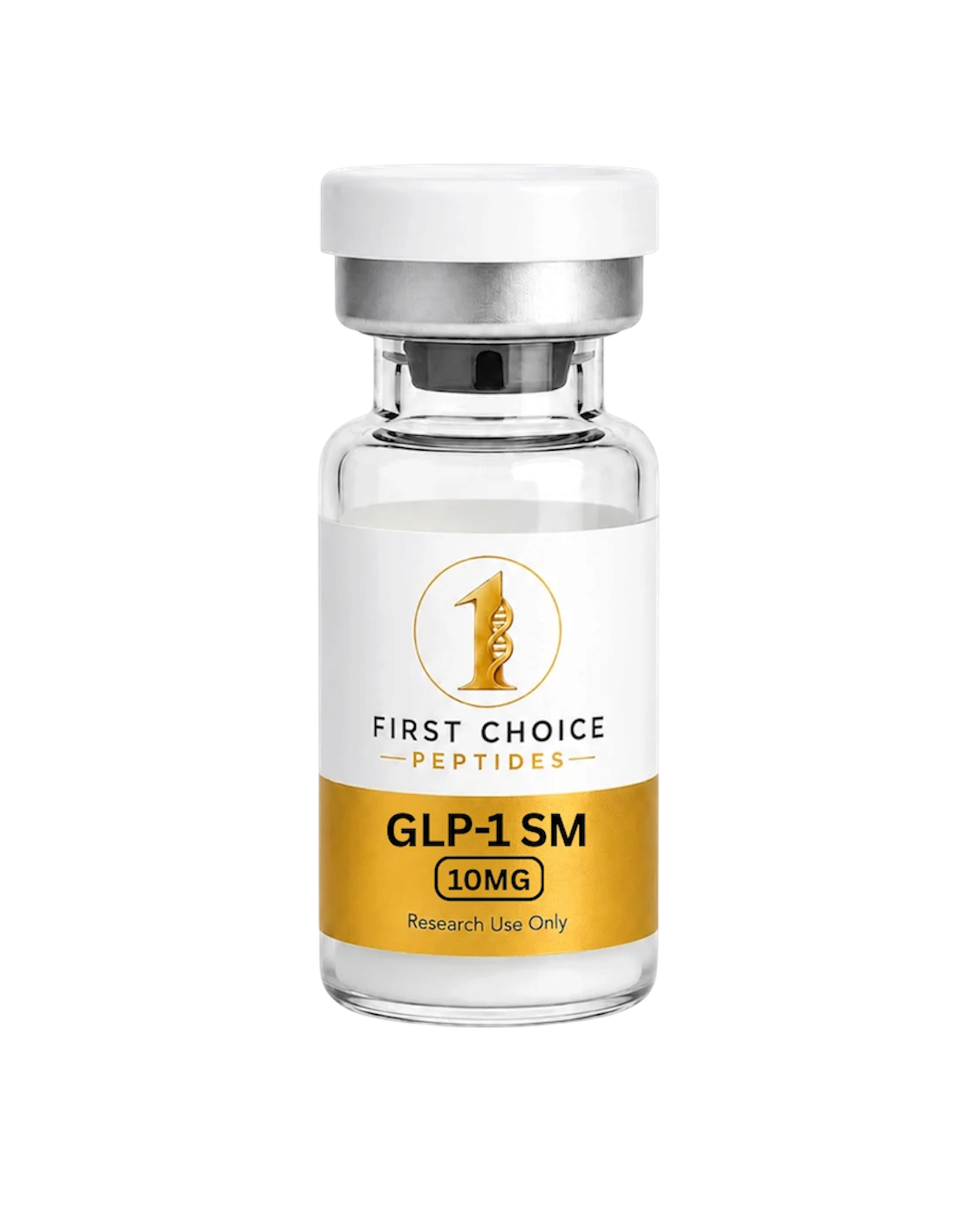
GLP-1 SM
Modified GLP-1 analog for receptor-signaling research
chemically modified 31-amino-acid GLP-1 analog studied in glucagon-like peptide-1 receptor signaling, ligand binding, and peptide-stability models. Offered strictly for laboratory research use only. Not for human or veterinary use.
Frequently researched together
Other laboratory research compounds available in our catalog.

Compound information
Technical specifications
What is GLP-1 SM?
GLP-1 SM is a synthetic 31-residue peptide whose sequence corresponds to a chemically modified form of glucagon-like peptide-1, the incretin peptide derived from the proglucagon precursor and released from intestinal enteroendocrine L cells. The catalogue classes it as a synthetic GLP-1 receptor agonist peptide analogue: a laboratory-assembled molecule built on the GLP-1 backbone and altered at selected positions so that it differs from the native peptide in enzymatic stability assays. Analogues in this class are commonly prepared by solid-phase synthesis and carry a side-chain acylation, a general peptide-chemistry strategy used to promote reversible albumin association and to raise resistance to proteolysis in in-vitro assays.
The identifier recorded in the catalogue entry is the molecular formula, C187H291N45O59. A CAS registry number is not catalogued here and a molecular weight is not catalogued here, so neither value is stated. The full residue sequence and the positions of the modifications are likewise not recorded, and no sequence is asserted on this page. The material is listed under cell biology, is supplied lyophilized in a 10 mg vial, and carries no alternative catalogue synonyms.
Purity and identity are established by third-party HPLC and mass spectrometry, with a certificate of analysis for each lot. GLP-1 SM is supplied strictly for laboratory research and is not for human or veterinary use, nor for consumption, administration, diagnostic use or therapeutic use.
- Molecular formula
- C187H291N45O59
Stability information
Recommended handling and storage conditions for retaining compound identity and integrity in the laboratory.
Store lyophilized at −20°C, protected from light. Reconstitute and refrigerate (2–8°C) for short-term research use.
Regulatory information
Development origin and regulatory status, compiled for reference.
Research compound · Not FDA-approved
Frequently asked
Questions about GLP-1 SM
What purity is GLP-1 SM supplied at, and is a Certificate of Analysis available?
Yes. Each lot of GLP-1 SM is tested by a third-party laboratory using HPLC for purity, and the certificate of analysis for the current lot is linked on this page and in the certificate library.
How is the identity of GLP-1 SM verified?
Identity is confirmed by mass spectrometry against the expected molecular weight, alongside HPLC retention behaviour. Both results are recorded on the lot certificate.
How should GLP-1 SM be stored on receipt?
Lyophilized material is stored at -20 C protected from light. Once reconstituted it is kept at 2 to 8 C for short-term laboratory use, and repeated freeze-thaw cycles are avoided.
Where is GLP-1 SM shipped from?
Orders ship from the United States in discreet, tracked packaging. Shipping is available to US addresses only.
Is GLP-1 SM supplied for research use only?
Yes. GLP-1 SM is sold strictly as a laboratory research material. It is not for human or veterinary use, not for diagnostic procedures, and has not been evaluated by the U.S. Food and Drug Administration. See the research use disclaimer for the full terms.
Answers describe how this material is tested, stored and shipped. They are not guidance on any use, and this compound is not for human or veterinary use.
Sources & references
Published literature in which this compound has been the subject of laboratory or preclinical study. Listed for bibliographic reference only.
Research and educational purposes only. These references are provided for bibliographic context. They are not evidence of safety or efficacy, and nothing here is medical advice or a claim about any use in humans or animals.
The Journal of clinical investigation
Discovery, characterization, and clinical development of the glucagon-like peptides
Molecular cell
Differential GLP-1R Binding and Activation by Peptide and Non-peptide Agonists
European journal of biochemistry
Structure/activity characterization of glucagon-like peptide-1