

Cell Biology
L-Glutathione
Reduced L-glutathione tripeptide
Reduced L-glutathione is an endogenous gamma-glutamyl tripeptide used in biochemical and cell-biology research involving redox chemistry, thiol-dependent reactions, enzymatic assays, oxidative-stress models, and analytical method development. This material is intended exclusively for laboratory research and is not supplied for human or veterinary use.
Frequently researched together
Other laboratory research compounds available in our catalog.

Compound information
Technical specifications
What is L-Glutathione?
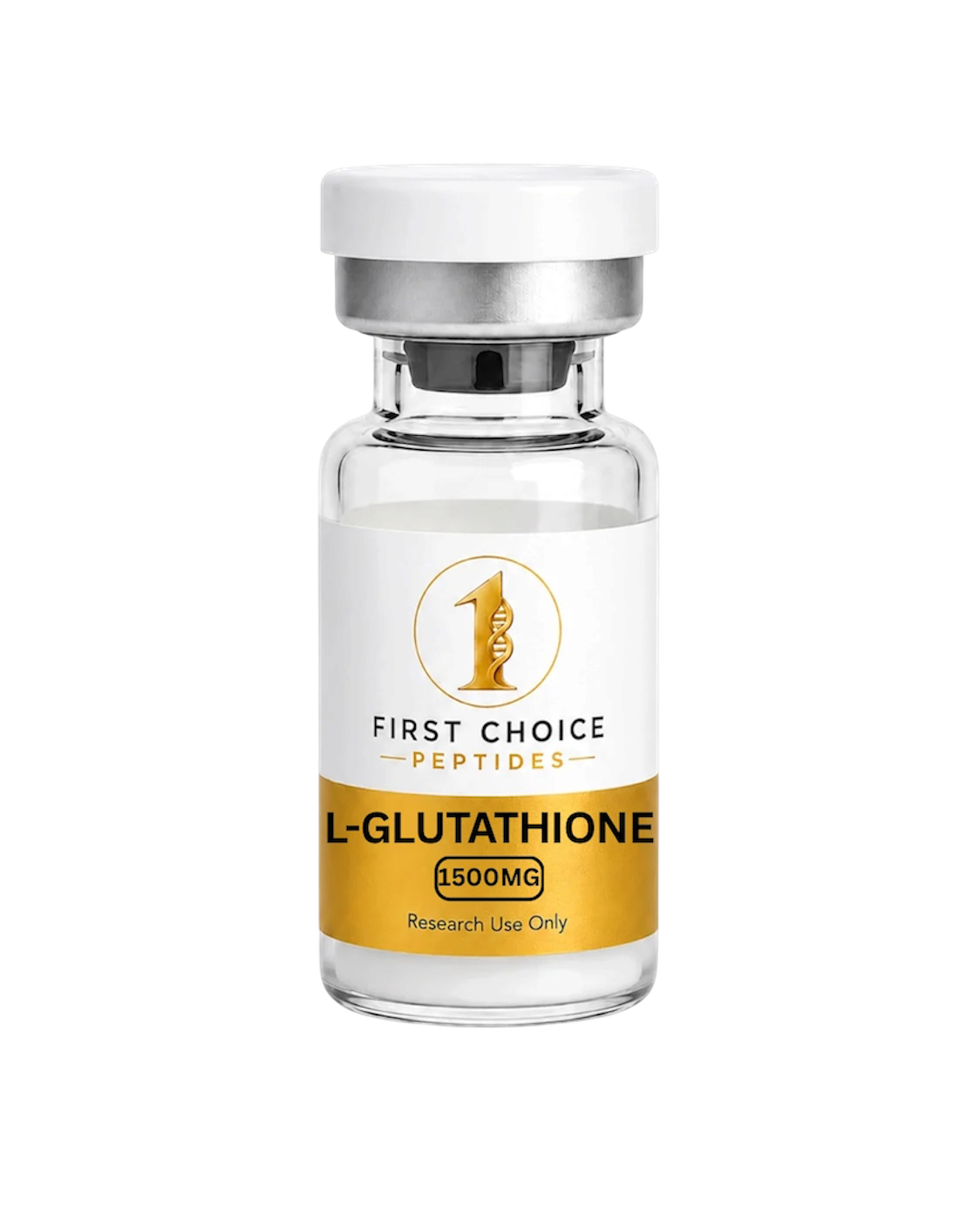
L-Glutathione is a three-residue peptide whose sequence corresponds to the endogenous gamma-glutamyl tripeptide found in the cells of essentially every aerobic organism. The catalogue supplies the reduced form, listed under the synonyms GSH and L-glutathione reduced, in 600 mg and 1500 mg presentations. It is supplied strictly for laboratory research use and is not for human or veterinary use.
The sequence is gamma-Glu-Cys-Gly. The prefix gamma is the defining structural feature: the bond joining glutamate to cysteine is formed from the side-chain carboxyl rather than the alpha-carboxyl, producing an isopeptide linkage that resists ordinary aminopeptidases and gives the molecule a dedicated enzymatic degradation route. The central cysteine carries a free sulfhydryl group, the chemically active centre of the molecule, which on oxidation joins two molecules through a disulfide bond to give the dimer GSSG.
L-Glutathione is catalogued under CAS 70-18-8 with the molecular formula C10H17N3O6S and a molecular weight of 307.33 g/mol, values that describe the reduced monomer rather than the oxidised dimer. The single sulphur atom in the formula is the cysteine thiol. It is used as a bulk reagent in redox chemistry, thiol-dependent reactions, enzymatic assays, oxidative-stress model systems and analytical method development.
- CAS number
- 70-18-8
- Molecular formula
- C10H17N3O6S
- Molecular weight
- 307.33 g/mol
Stability information
Recommended handling and storage conditions for retaining compound identity and integrity in the laboratory.
Lyophilized
-20°C · Protect from light
Reconstituted
2-8°C
Regulatory information
Development origin and regulatory status, compiled for reference.
Research compound · Not FDA-approved
Frequently asked
Questions about L-Glutathione
What purity is L-Glutathione supplied at, and is a Certificate of Analysis available?
Yes. Each lot of L-Glutathione is tested by a third-party laboratory using HPLC for purity, and the certificate of analysis for the current lot is linked on this page and in the certificate library.
How is the identity of L-Glutathione verified?
Identity is confirmed by mass spectrometry against the expected molecular weight of 307.33 g/mol, alongside HPLC retention behaviour. Both results are recorded on the lot certificate.
How should L-Glutathione be stored on receipt?
Lyophilized: -20°C (Protect from light); Reconstituted: 2-8°C.
Where is L-Glutathione shipped from?
Orders ship from the United States in discreet, tracked packaging. Shipping is available to US addresses only.
Is L-Glutathione supplied for research use only?
Yes. L-Glutathione is sold strictly as a laboratory research material. It is not for human or veterinary use, not for diagnostic procedures, and has not been evaluated by the U.S. Food and Drug Administration. See the research use disclaimer for the full terms.
Answers describe how this material is tested, stored and shipped. They are not guidance on any use, and this compound is not for human or veterinary use.
Sources & references
Published literature in which this compound has been the subject of laboratory or preclinical study. Listed for bibliographic reference only.
Research and educational purposes only. These references are provided for bibliographic context. They are not evidence of safety or efficacy, and nothing here is medical advice or a claim about any use in humans or animals.
Cellular and molecular life sciences : CMLS
Mechanisms of ferroptosis
Molecules (Basel, Switzerland)
Glutathione-Related Enzymes and Proteins: A Review
Antioxidants & redox signaling
Glutathione Degradation
Biochimica et biophysica acta
Nuclear glutathione